



- By YIKONG
- 2026-05-29 15:39:45
- Technical
RGV vs AGV Key Differences Applications and Selection Guide for Smart Manufacturing
RGV vs AGV Everything You Need to Know for Smart Factory Logistics
In modern intelligent manufacturing two types of vehicles are widely used RGV Rail Guided Vehicle and AGV Automated Guided Vehicle
They may look similar since both are used for material handling but their core logic strengths and cost structures are completely different
This guide explains everything in a simple and practical way so you can clearly understand and apply it in real projects
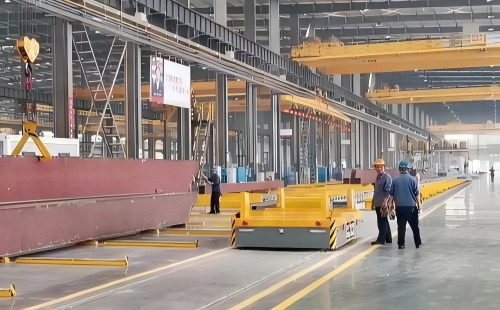
1 What Are RGV and AGV
RGV Rail Guided Vehicle
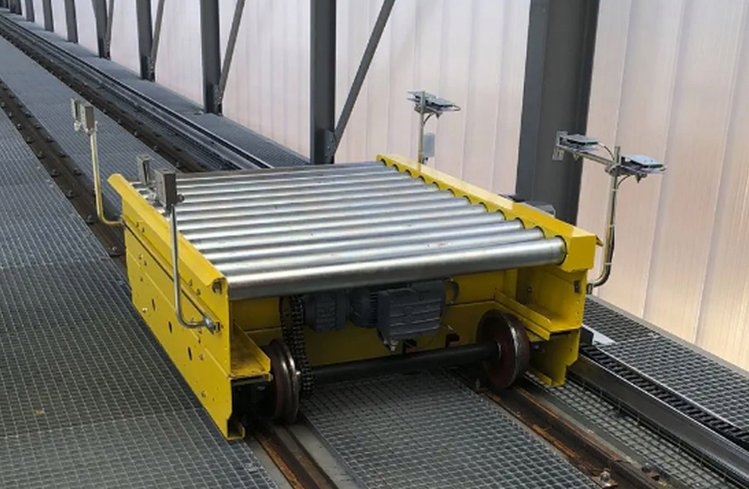
An RGV is a rail based transport system similar to a small train fixed on tracks
It runs on steel rails and is powered by busbar cable chain or contactless power supply without using batteries
It offers extremely high positioning accuracy and stability
The vehicle can only move along the predefined track and cannot deviate from it
AGV Automated Guided Vehicle
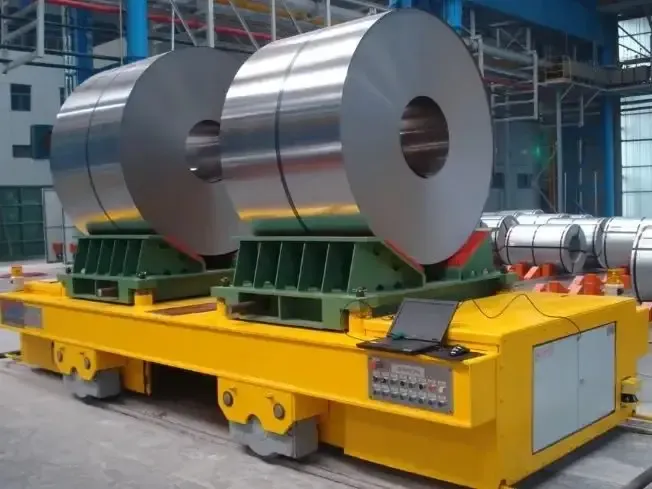
An AGV is a mobile robot that can move freely without physical tracks
It uses technologies such as LiDAR vision or magnetic navigation to determine its path
It is powered by lithium batteries and can automatically go to charging stations
Common navigation methods include magnetic tape QR code laser navigation and SLAM navigation
AGV is highly flexible and can adapt to changing environments
2 Key Differences Between RGV and AGV
Quick Comparison of RGV and AGV Systems
| Item | RGV Rail Guided Vehicle | AGV Automated Guided Vehicle |
|---|---|---|
| Movement | Fixed rail point to point | Free movement flexible routing |
| Navigation | Mechanical positioning encoder | LiDAR vision magnetic navigation |
| Accuracy | About 1 mm | About 5 to 10 mm |
| Flexibility | Very low | Very high |
| Route change | Requires reconstruction | Can be modified by software |
| Speed | 60 to 200 m per min | 30 to 90 m per min |
| Load capacity | Several tons to over ten tons | Medium to heavy higher cost for heavy load |
| Power supply | Continuous power no battery | Battery powered requires charging |
| Stability | Extremely high | Depends on floor and chassis |
| Maintenance | Low | Moderate sensors and battery |
| Obstacle handling | Stops immediately | Avoids or reroutes |
| System complexity | Simple | Requires scheduling system |
| Initial cost | High infrastructure cost | Higher vehicle and software cost |
| Long term cost | Low | Battery replacement and maintenance |
3 Core Differences Explained
Flexibility
RGV routes are physically fixed and changing them requires reconstruction of rails and floor which leads to high cost and downtime
AGV routes exist in software maps and can be modified instantly without interrupting production
This makes AGV ideal for dynamic manufacturing environments
Heavy Load and Stability
RGV systems provide excellent stability because the load is directly transferred to rails and ground
Even with very heavy loads positioning remains highly accurate and repeatable
AGV relies on chassis strength and floor conditions
For heavy duty applications AGV requires reinforced structure which increases cost
For high precision docking and robotic operations RGV is generally the better choice
Reliability and Maintenance
RGV has a simple and robust structure and can operate in harsh environments such as dust oil and high temperature
AGV includes sensitive components such as sensors controllers and batteries which require regular maintenance
However AGV systems offer higher flexibility because one vehicle failure does not stop the entire system
4 Why Advanced Factories Use Both RGV and AGV
Modern smart factories often combine both systems to achieve maximum efficiency and flexibility
RGV for Main Production Lines
Used for fixed routes high frequency transport heavy loads and precise positioning
Typical applications include welding sandblasting and painting production lines
AGV for Flexible Logistics
Used for warehouse to production transport multi line distribution and dynamic routing
Typical applications include raw material delivery component supply and finished goods transport
System Coordination
Manufacturing execution systems provide production tasks
Warehouse management systems plan material flow
Scheduling systems assign tasks based on characteristics
Fixed heavy and repetitive tasks are assigned to RGV
Flexible and multi point tasks are assigned to AGV
This creates a complete intelligent logistics system
5 Simple Summary
RGV is the backbone of the factory providing stable precise and heavy duty transport
AGV is the flexible network enabling adaptive and intelligent material handling
6 How to Choose
.png)
If the route is fixed with heavy load and high precision requirements choose RGV
If the route changes frequently across multiple areas choose AGV
If both requirements exist use a combined RGV and AGV system