



- By YIKONG
- 2026-05-12 10:30:30
- Technical
AGV Path Optimization and Traffic Management in Manufacturing Material Handling
In modern smart manufacturing and flexible production systems, AGVs (Automated Guided Vehicles) have become a standard component of intralogistics operations. In many factories, they are no longer an optional upgrade but a core infrastructure for material transportation.
However, after deployment, many companies face a practical issue: even though AGVs are introduced, overall efficiency does not always improve as expected. During peak operation periods, congestion, waiting, and even temporary deadlocks can still occur, which directly affects production rhythm.
The root cause is not the AGV itself, but the transition from single-vehicle operation to multi-vehicle coordination. The problem is no longer “how one vehicle takes the shortest path,” but “how multiple vehicles operate efficiently in a shared space without interfering with each other.”
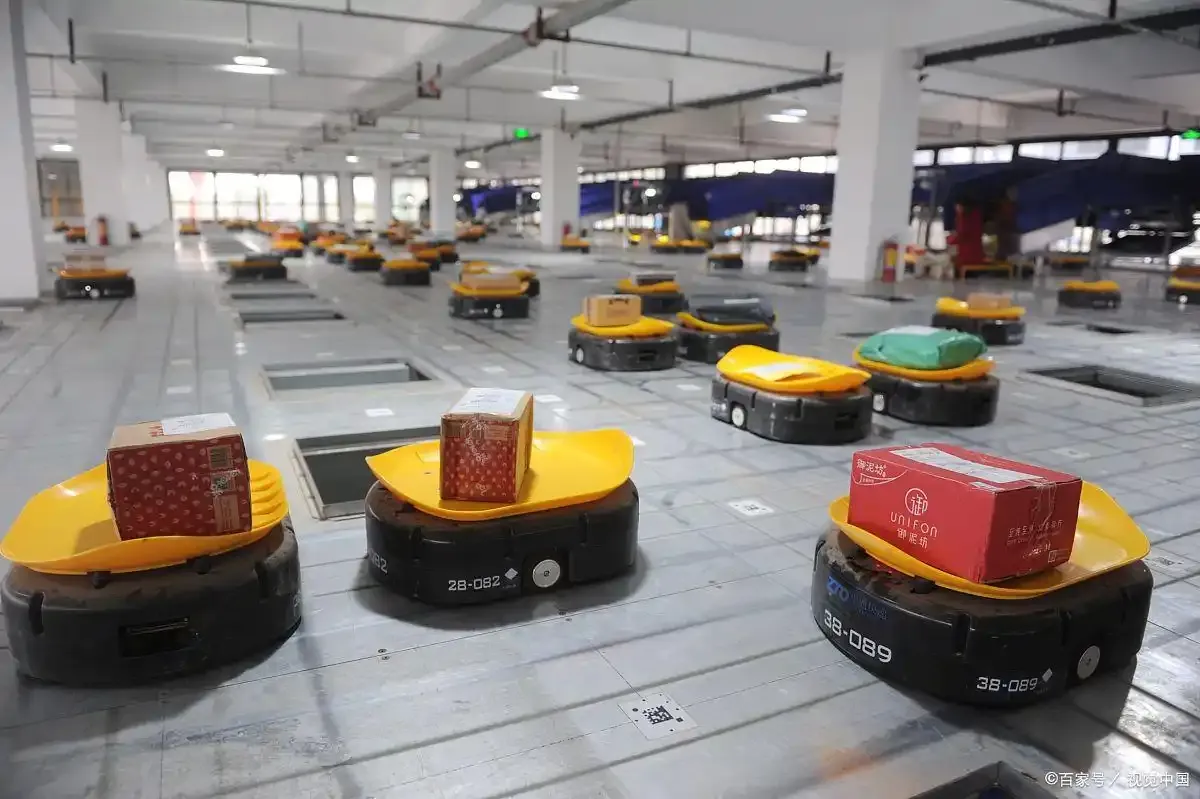
How problems emerge in multi-AGV systems
In early-stage applications, AGVs are typically used for simple point-to-point transportation, such as moving materials from warehouse to production lines. The routes are fixed and system complexity is low, so problems are rare.
As production speed increases and SKU variety expands, multiple AGVs start operating in overlapping areas. At this stage, several typical issues begin to appear:
Intersection congestion, where multiple vehicles compete for the same node
Head-on deadlocks in narrow lanes
Imbalanced path utilization, where some routes are overloaded while others remain idle
These issues are often perceived as scheduling problems, but in essence, they come from a lack of global path coordination and insufficient traffic rules.
.webp)
2. Path optimization: a layered approach works best
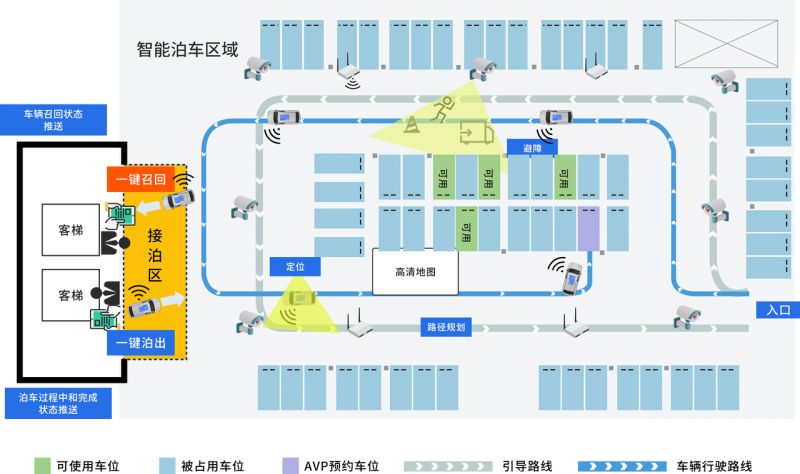
In real industrial projects, starting with overly complex algorithms often leads to poor practicality. A more reliable approach is to implement path optimization in layers, from static planning to dynamic adjustment.
The first layer is static map modeling and route planning. The factory layout is abstracted into a graph structure, where workstations, buffers, and charging stations become nodes, and travel lanes become edges. For high-frequency tasks such as material feeding or empty pallet return, multiple predefined routes can be assigned with priorities. Classic algorithms like A* or Dijkstra are usually sufficient at this stage. The key is not algorithm complexity, but whether the main traffic routes are well designed.
The second layer introduces dynamic path adjustment. Since factory environments are continuously changing, time must be considered in path planning. When the system detects that a segment is likely to be occupied in the near future, local rerouting can be triggered to avoid congestion.
For bottleneck areas that cannot be bypassed, a path reservation mechanism is required, often referred to as time windows or path locking. In simple terms, only one AGV is allowed to occupy a critical section within a defined time slot, while others must wait at entry points.
In real implementations, system stability is not only determined by algorithms but also by the execution quality of the vehicle hardware. For example, integrated AGV drive systems such as those provided by Yikong Intelligent focus on the execution layer, including drive wheels and motor controllers. Their consistency in low-speed control, smooth acceleration and deceleration, and load stability directly affects how well multi-vehicle coordination performs under congested conditions.
Conflict handling is also more effective when categorized instead of unified under one rule set:
Node conflicts are resolved by priority logic
Head-on conflicts are managed through zone occupation rules
Following conflicts rely on distance control and speed regulation
3. Traffic management is often more critical than algorithms
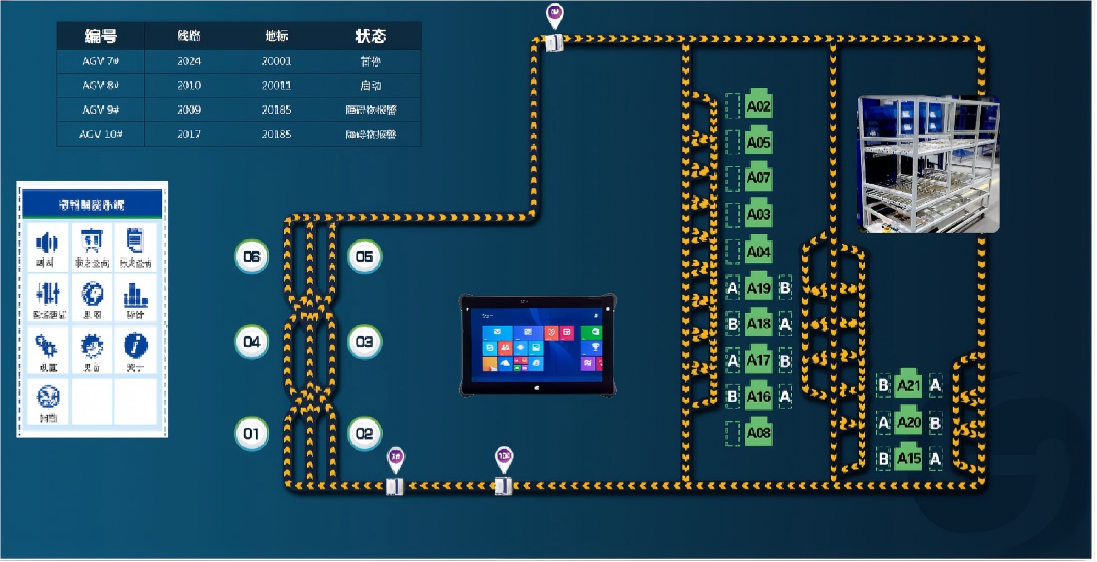
In many projects, significant effort is spent on path algorithms, yet congestion still occurs after deployment. The root cause is usually incomplete traffic rule design.
From practical experience, dividing the factory into functional zones is essential. Separating raw material areas, processing zones, and finished goods areas helps regulate vehicle flow and prevents localized congestion. In high-density layouts, a unidirectional loop layout is often more stable, as it naturally eliminates most head-on conflicts.
At key intersections or narrow passages, clear traffic control logic is necessary. Even without physical traffic lights, the system should behave similarly to a signaling system:
Only one direction is allowed at a time
Main corridors have priority over secondary lanes
Emergency tasks can override normal rules
Buffer and waiting areas also play an important role. Without sufficient buffering space, localized congestion can quickly propagate through the system. Properly placed holding zones allow early redistribution of vehicles before congestion spreads.
From an engineering perspective, execution hardware also contributes to system stability. Variations in drive wheel performance or motor controller responsiveness can become more noticeable in dense multi-vehicle environments, affecting overall smoothness and coordination.
Conclusion
In real-world projects, AGV system performance is not determined by a single algorithm, but by the clarity of operational rules and the reliability of the execution layer.
Path optimization defines how vehicles move, while traffic management determines whether they can continue moving smoothly under load. When system design, traffic rules, and hardware execution work together, multi-AGV systems can achieve stable and efficient material flow in manufacturing environments.